Storytelling
Storytelling is a way of connecting and showing respect for ourselves and others. Our signature 6 prompts have been used all around the world, to encourage storytelling amongst people of all ages.
We believe every person should have the chance to tell their own story in their own words.

We created a storytelling kit you can use. Keep reading to find:
- Six creative prompts: poetry, recipes, street histories, family histories, memorials, and changemaking.
- Postcards, colouring-in and easy-read versions you can download.
- Tips and ideas for running your Bridging Histories storytelling event.
- We'd love to hear how your Bridging Histories events go.
Step 1: Explore our 6 signature Bridging Histories storytelling prompts


Step 2: Plan your Bridging Histories workshop
We have done hundreds of Bridging Histories workshops and interviews over the years. We've got a great sense of what works reliably, every time. Here are a few well-tested plans you can use 'right off the shelf.'
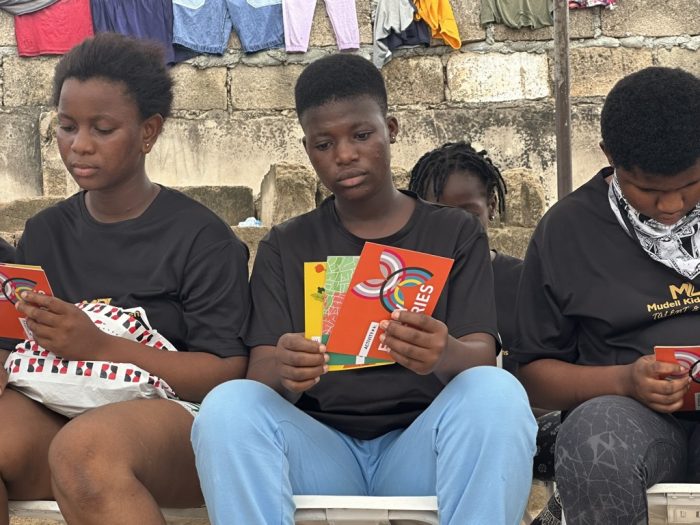
Workshop Concept 1: Pick-and-share
This works with all kinds of groups, no matter whether you're in a room with 80 strangers or 4 friends.
- Talk everybody through the 6 Bridging Histories prompts (5 min)
- Get everybody to spend a few minutes picking a prompt that interests them (2 min)
- Spend 10 minutes writing notes in response to the prompt (10 min)
- Get everybody to share with the person next to them. (5 minutes x 2 = 10)
- Then share back to the group (30 - 40 min). If it is a small group, you can go around the circle and all share. In a big group, invite volunteers for each theme. e.g. "Who has a recipe to share?" "Who has a street history?"

Optional props:
Put out visual cues so people can remember the 6 prompts.
We like to spread Bridging Histories postcards out on the table, so people can see all six and choose the postcard they like best.
Or we might put a postcard on each person's seat before they come in.
You could instead show the activity prompts using a projector; or write them out on a chalkboard or somewhere easily visible.

Workshop concept 2: Storytelling over arts & crafts
Many of our favourite workshops have combined storytelling + arts & crafts. It works great to get people sharing stories while doing something creative with their hands. Somehow the combination of arts + storytelling takes the pressure off of both activities and everybody relaxes. We've gotten people telling stories over
- Pottery
- Nature painting
- Lantern-making
- Sewing
- Yarn art ('God's eyes')
We like to pop up a gazebo in a popular park, and run drop-in art-and-storytelling activities for 2 hours at a time.

We like to think of creative ways to combine the Bridging Histories storytelling prompts with arts activities.
For instance, if crafting with natural objects, we might ask "where do you first remembering seeing plants like these?" or invite people to tell their early memories of an experience of connection to nature.
For one workshop people brought along an item of clothing to repair, and learned sewing skills from an expert seamstress. We added the storytelling element by asking people e.g. 'What's the story behind this jacket? Has it been with you anywhere unique? Tell us about that place." (Street history)

Workshop Concept 3: Interview and swap
- Intro (5 min). Explain you'll be doing an interview activity. Talk everybody through the 6 Bridging Histories prompts. Tell everybody to pick 3 of the prompts, one of which must be 'changemaker'.
- Break into pairs and have one person interview the other; then swap. Allow 15 minutes per interview x 2 interviews. (30 min)
- Feed back to the group something memorable you learned (30 - 40 min)

Variation 1: Why not try recording the interviews and create a quick micro-podcast? (1 hour)
Variation 2: Send pairs out to do Bridging Histories interviews with people in the neighbourhood (e.g. passersby, residents, or shopkeepers). Return and feed back to the group. (30 min + 30 min)
Optional props: Give everybody a sheet with all the interview questions ready to hand and precisely worded.

Step 3: Gather your props
Our activity-prompt postcards are popular with all ages.
For a younger audience, why not try this colouring in page?


Step 4: You're ready to advertise and deliver
Promote your event through school or your workplace.
Be sure to give plenty of time for word to get out.
It is better to advertise well in advance. Don't leave yourself scrambling at the last minute.
At the end of your event, be sure to gather feedback. Asking people to fill in the sentence 'My favourite thing about this workshop was ..." and "For future workshops, I suggest..." That won't take long to do and can help you get a good evidence base for future events.
Finally be sure to tell us what you've done! We love hearing about your activities, from anywhere in the world.
